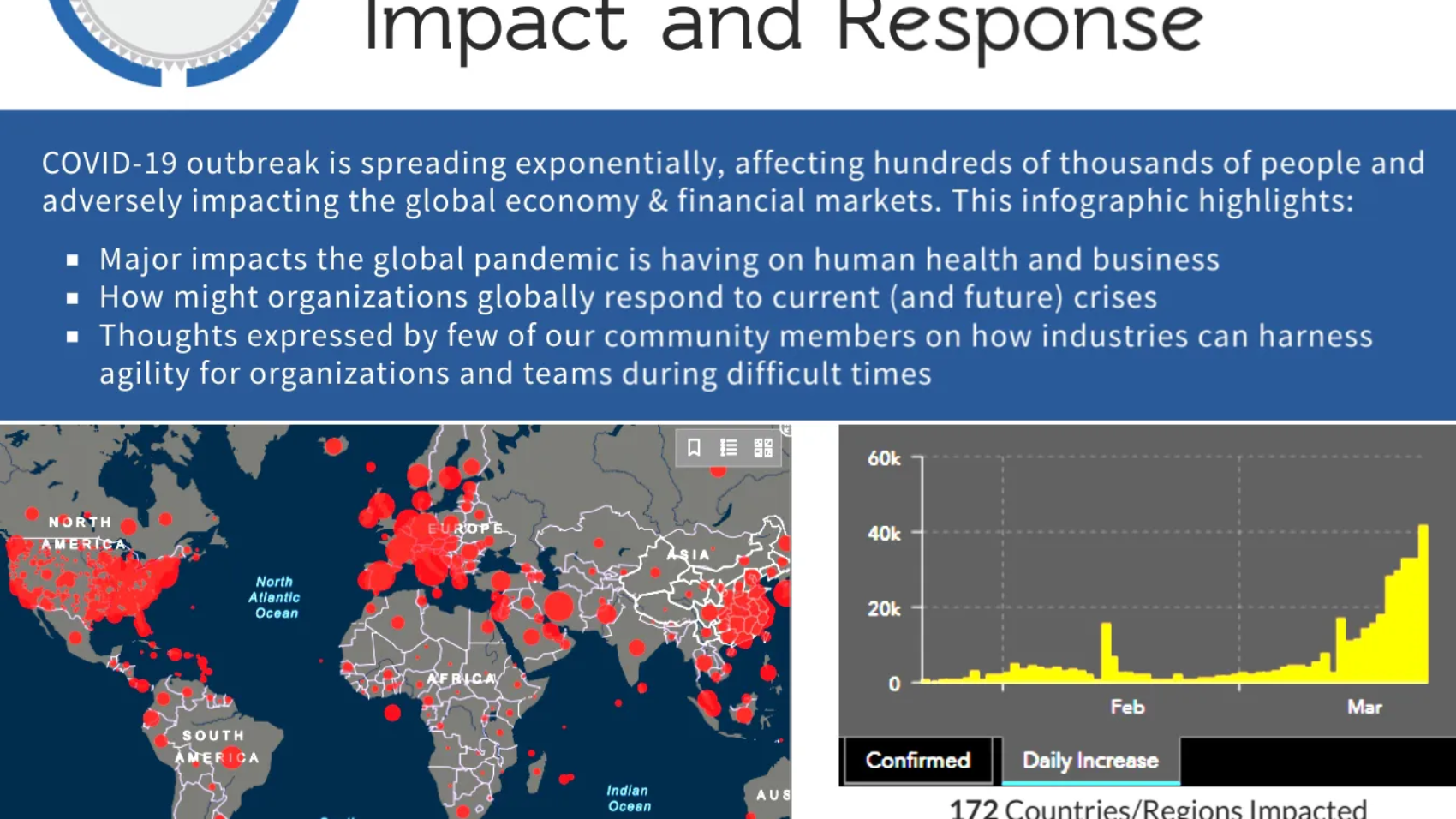
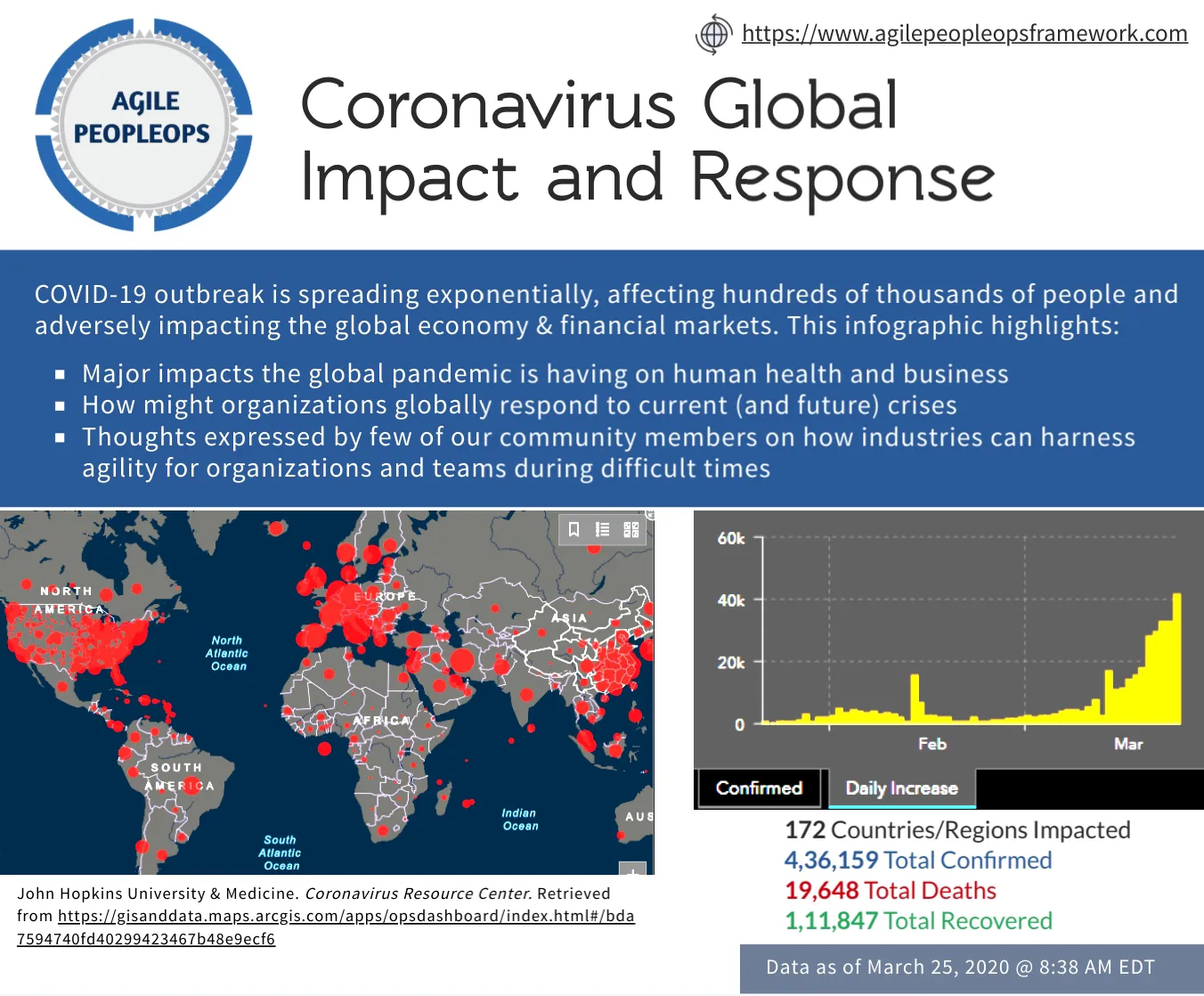
Coronavirus Global Impact And Response

Coronavirus Global Impact and Response

Coronavirus Global Impact And Response

The Infographic “Coronavirus Global Impact and Response” provides a high-level overview of:

The PDF version of the Infographic can be downloaded here: https://drive.google.com/open?id=14OVtllbbje7BOVoxBkzRHd5_FNR32MQl

The HR Manager As A PeopleOps Scrum Master

The HR Manager as a PeopleOps Scrum Master

The HR Manager As A PeopleOps Scrum Master

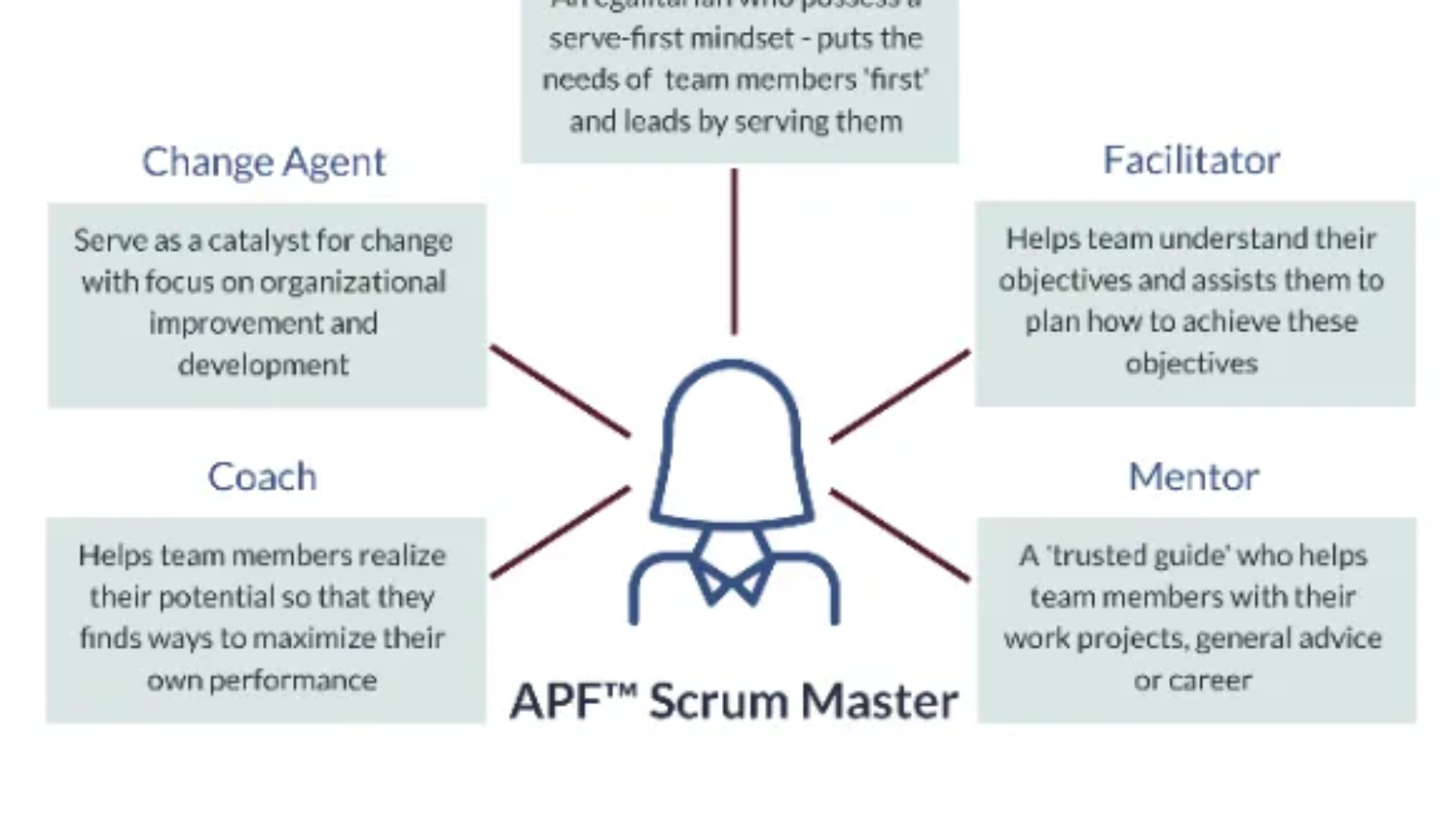
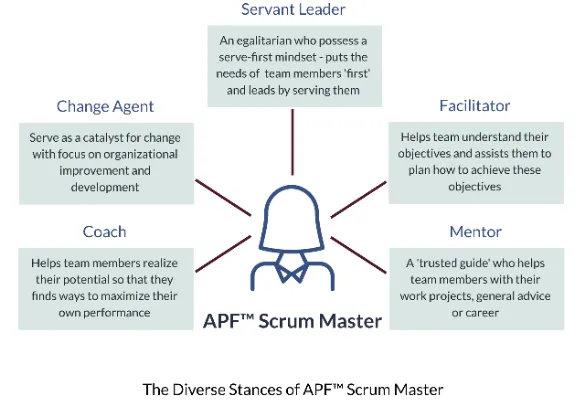
The PeopleOps Scrum Master (PSM), aka HR Manager is an individual with diverse stances (for example, facilitator, servant leader, coach, change agent) as shown in the image.

Different contexts and situations call for different stances, and the PeopleOps Scrum Master needs to know when and how to apply them.

This post explicates a real-time situation and the stances of PeopleOps Scrum Master that a Head HR fulfilled, and serves as an inspiration for today’s HR Manager who is keen to foster agility and human experience at the workplace.

Situation Overview 

The Head HR was associated with a company that specializes in ready to move workspaces and interiors segment.

Prior to her joining, the company’s HR department had minimal systems, processes and procedures in place for several years.

The industry trends and the changing role of HR deemed the company’s management to redefine their HR function.

The Head HR was recruited and was accountable for organizational development and change management. 

Post joining, one of the change initiatives the Head HR proposed was to conduct an ‘external audit’.

To initiate the same, she examined the employees’ files and was shocked that 

  • hard copy files of some employees were missing 
  • important documents like mark sheets and experience letters of some employees were missing 
  • few files were torn and disorganized
  • most of the files didn’t have increment letters, and rewards & incentives documents 

The HR team (Head HR & Recruiter operating from headquarters, and HR Executive operating from a different state) had only 20 days left to organize all the 135 employees’ files.

The Recruiter was overloaded with fulfillment of priority requisitions for about 10 days and the HR Executive had other priorities to be fulfilled. 

Action Plan 

The Head HR prepared the following action plan: 

  • Get all the files from different offices to the headquarters (within 5 days from the date the process begins)
  • Organize logistics for the HR Executive to come down to the headquarters. Ensure the processes in the location are not impacted in the absence of HR Executive (10 days from the date the process begins) 
  • For the files with missing documents, ensure the employees’ give the documents to Head HR within 7 days 
  • For the files with missing hard copy documents, search for soft copies in company’s repository. If unavailable, take the help of employees to create new files 
  • Prepare new set of files for those that were torn and disorganized 
  • Partner with finance team and employees to get all the increment letters, and add them to the files 

The Head HR as a PeopleOps Scrum Master 

Change Agent and Servant Leader 

  • The PeopleOps Scrum Master (aka Head HR) very well understood that her team had other priorities to fulfill before they could join hands with her in this priority project. She very well elicited Agile PeopleOps Framework™ values like respect, commitment and adaptability. 
  • She didn’t wait for them to complete their work. Instead, as a catalyst for change and with a true intention ‘to serve’, the PeopleOps Scrum Master set aside 2 hours every day to work herself on the project. 
  • For employees who were busy at the construction site and could not fill the necessary forms, the PeopleOps Scrum Master elicited stewardship behavior to address the impediment. On their behalf, she filled the forms by taking the details over phone. The PeopleOps Scrum Master shared the soft copy of the duly filled form to the employees through e-mail and WhatsApp. She asked the employees to make necessary corrections, sign the documents and send it to her in a day’s time. She ensured that this activity was completed before her team could join her in the project. 

Facilitator and Mentor

  • The HR team (HR Executive and Recruiter) joined the project after 10 days. Both didn’t have any prior experience in employees file management. As a mentor, the PeopleOps Scrum Master explicated the importance of file documentation and management to the team. She provided the necessary guidance on how the process should be followed, including soft copies preparation and saving them in employees’ database. As a facilitator, the PeopleOps Scrum Master promoted collaboration and enabled the team to achieve their project objectives. 

Outcomes 

The entire project of employees file documentation was completed as per the schedule (20 days). An internal audit was conducted by both finance and quality teams, followed by the external audit. There were zero errors in the entire process. 

The HR team (PeopleOps Scrum Master, HR Executive and Recruiter) received accolades, a team reward of INR 5000, and a half-day off from the company’s Managing Director. The team spent the reward amount toward team lunch and sweets for all employees. 

 Conclusion:

The PeopleOps Scrum Master, aka HR Manager applied multiple stances based on the context and situation, and helped the project to be successful. The team learnt that where there is a will to accomplish objectives and tasks, there is a way to fulfill them without hampering the daily activities. 

Author: Kalyani Pantangi

Edited by: V Lakshmi Chirravuri

Graph-and-Samsung

One Metric that Matters – Part 1

What Really Counts?

(Editor’s note: This is a two-part post. Part 1, below, introduces the One Metric That Matters’ approach to metric measurement. For more on this and taking a lean approach to analytics, we recommend you read Lean Analytics, by Alistair Croll and Benjamin Yoskovitz. Part 2, to come, will take this approach and overlay it with enterprise transformation, particularly that of the Agile HR variety. Enjoy!)

We live in a data-rich world, filled with trackable, measurable interactions that can help us iterate on products and processes in nearly real-time. We have a wealth of information at our fingertips about user behavior, and we have a number of ways to validate just how successful we’ve been in a given initiative.

This is, of course, good news: Generations before us couldn’t imagine the user-level data we have today, nor the tools we have available to churn it all into meaningful insight.

So we have a lot of data. But do we know what matters in this mess of numbers and metrics? What really matters when we talk about whether we are increasing user engagement with a given product or service? Are click-through rates or downloads really indicative of how likely your service is to appear next year? Let’s assume you have a mature product: how do you know what customers want in the next iteration? What measurements will you use to help take your solution to the next level (whatever it is – it’s all relative.)

Data is dangerous when we abuse it – and it’s very easy to do: When a product is in beta the metrics may not be relevant to a year-old solution with a solid customer base. In fact, we need to identify which metrics to shortlist and which will be the single metric that defines the success of a solution in the wild.

What is that One Metric That Matters (OMTM)?

The OMTM is less a concrete thing, and more of a guideline that helps you, the solution owner, identify how a product is doing. The concept comes from Ben Yoskovitz’s “Lean Analytics”, a book primarily for startups, focusing on deriving meaning from data.

When it comes to OMTM, different stages demand different metrics, and of those metrics, there should really only be one that you rely on to tell you how things are going. This sole focus helps cut noise from the signal and allows you to make very specific decisions for very specific reasons.

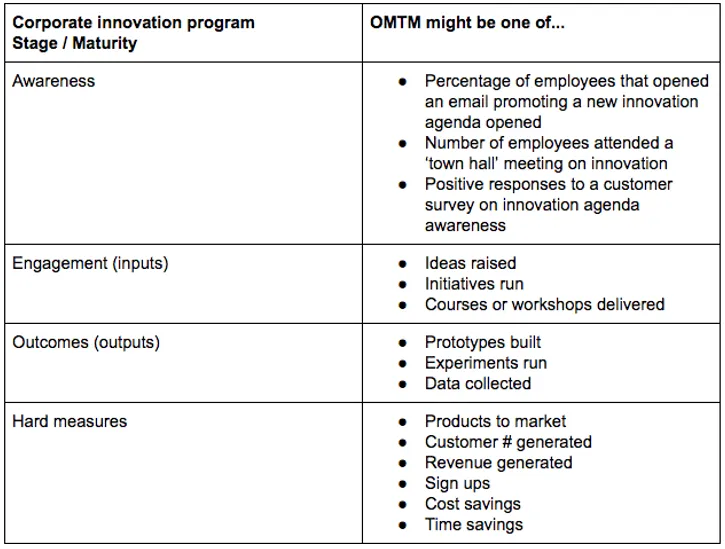
Steve Glosky, entrepreneur and founder, has put together a nice table of metrics describing which metrics can be used at what stage of the hypothetical innovation program in a corporation. Out of the many steps listed in each step, the OMTM framework demands that you obsessively pick just one to track and decide on it.

OMTM Framework

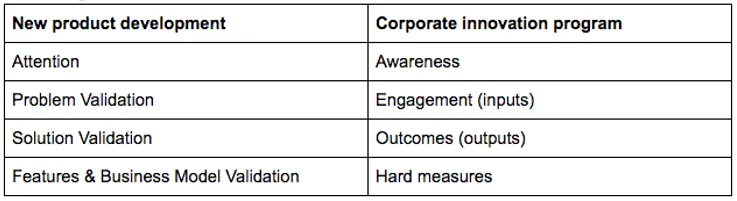
What happens once you’ve identified your One Metric? You measure it! You’re free to track other metrics too, but the One Metric becomes your North Star. As things mature (or reverse course), change what that metric should be for the various stage. Glaveski summarizes, and suggests themes for each stage of growth (again, for that hypothetical Innovation Program):

Hypothetical innovation program difference table

Since your initiative or product may be different, the above tables may not apply to you. Nevertheless, the concepts remain the same: cutting data noise from signals, and investing in that sensing and responding to that signal, will empower you to make impactful decisions for product development. Reduce the search for non-significant numbers, and see real progress where it matters.

Author: Christopher Goscinski


What is Agile Method and How It Works

If you’re reading this, there is a high likelihood that you are familiar with Agile methodologies in software development.

You know about Scrum, Kanban, SAFe. You’re familiar with why these methods work, and the value they deliver not only to organizations, but teams leveraging them.

You recognize the value inherent in iterative development, and collaborative environments.

Agile has taken the business world by storm: Adoption on Engineering teams continues to accelerate (12th State of Agile Report).

And the values and principles behind the Agile Manifesto are evolving to meet the needs of other business functions.

Agile in HR isn’t particularly new – plenty has been written to date about why HR would benefit from such a framework.

And yet, there hasn’t been a very good answer as to how Agile values can be tactically brought into an HR organization.

Enter the Agile PeopleOps Framework (APF). APF enables HR teams to intentionally adopt a more Agile mindset.

It shifts from a worldview of VUCA to one of flexibility, responsiveness, and transparency.

APF borrows heavily from the structure of the Agile Manifesto to bring a refreshed list of values and priorities, directly in line with the HR business function.

A Tale of Two Manifesto

Mirroring the structure of a Scrum Team (and at scale, a program team), APF focuses on human capital strategy, and intentional talent acquisition.

It is a full-service framework, accounting for COPs, KPIs (now called Human Effectivity Indicators – or HEIs), and end-to-end value delivery (from Talent Acquisition, to long-term employee.)

Roles and processes are similar to Scrum, and the underlying feel of adoption is not unlike that of software development.

If your organization has adopted Agile methodologies within its Engineering Teams, consider APF as part of your organization’s journey.

There is, of course, a lot to unpack here. Values, principles, roles, and processes differ slightly from that of their traditional Agile counterparts.

Over the next few weeks, we’ll discuss some of these changes in greater depth. We’ll detail how the APF Agile HR Manifesto differs from that of the Agile Manifesto.

We’ll discuss where we believe Agile (as a mindset) is heading, and why we think Agile is here to stay, albeit in various forms.

Also peek into the processes that drive APF – diving into the customizations of Scrum and Kanban that were made in response to different environments and goals.

Finally, we’ll look ahead and talk about what it means to be culturally agile, and how to get there.

A fair warning: this is Systems Thinking-type stuff. Get ready to think big!

We’re excited to introduce APF, and we think you’ll begin to find value from Day 1 of adoption.

Our PeopleOps Coaches offer 1:1 coaching, and other services to help you get started on your journey (or to help accelerate!)

Author: Christopher Goscinski

Talent Acquisition Framework– Are You Agile Ready?

The war for talent acquisition framework continues. Companies are still grappling to gain a foothold in hiring the right talent within a short cycle time, amidst internal and external organizational turbulence. Why? What are those factors causing the hindrance?

Traditional hiring process is time consuming – skills and capabilities required for open requisitions are not whittled down to essentials, candidate application forms are not user-friendly, turnaround time between interview and offer roll out is huge, lack of timely collaboration across Talent Acquisition dyads (hiring managers and recruiters), and lack of timely feedback to candidates. Any or all of these factors negatively impact hiring efficiency, employer brand and talent experience.

Agile methodology is one of the major trends, now being applied to TA process. Prioritization, execution of work in short time-boxed cycles called ‘sprints’, a collaboration between cross-functional teams, reviews and retrospectives at the end of each sprint are some of the agile practices that are integrated with the TA cycle.

Implementing agility reduces cycle time, reduces costs, experiences positive talent with a major emphasis on creating opportunities for talent engagement during the talent acquisition cycle, and helps strengthen the employer brand Is found.

Agile talent acquisition 

Interpersonal collaboration, constant feedback culture and open communication, thus creates value for employers and candidates.

The traditional process cannot be made agile by thinking only through these. The talent acquisition team needs to develop an agile mindset, follow some key principles, behave, and take the following actions:

  • Conduct intake meetings and strategy with key stakeholders and leaders to obtain clarity on open requisitions and whittle out essential skills and capabilities
  • Set a goal for talent fulfillment within a short cycle time
  • Growth hacking techniques to source, screen and assess talent
  • Pay attention to talents’ attitude and their zeal for learning, instead of screening ‘only’ for education and/or experience
  • Implement Lean, Agile methodology to eliminate inefficiency and deliver higher value
  • Participate in sprint ceremonies and operate as a cross-functional collaboration team
  • Leverage technology to maximize Talent Acquisition phases and overall process
  • Set up metrics and indicators (quantitative and qualitative) and for every sprint evaluate the Talent Acquisition cycle progress
  • Develop courage and commitment to collect timely feedback from the hiring team
  • Share feedback with candidates on a timely basis
  • Practice open transparent communication flow within teams and between candidates and Talent Acquisition team
  • Strive toward continuous learning
  • Enhance employer brand value by nurturing positive talent engagement experience

When lean agile concepts are integrated into the talent acquisition process, Agile promotes agile acquisition profiling.

Curious to know about Agile talent acquisition framework process and practices, along with the functionalities and specific roles? click here to enroll for (APF CTC)™ or (APF CTSM)™ courses.


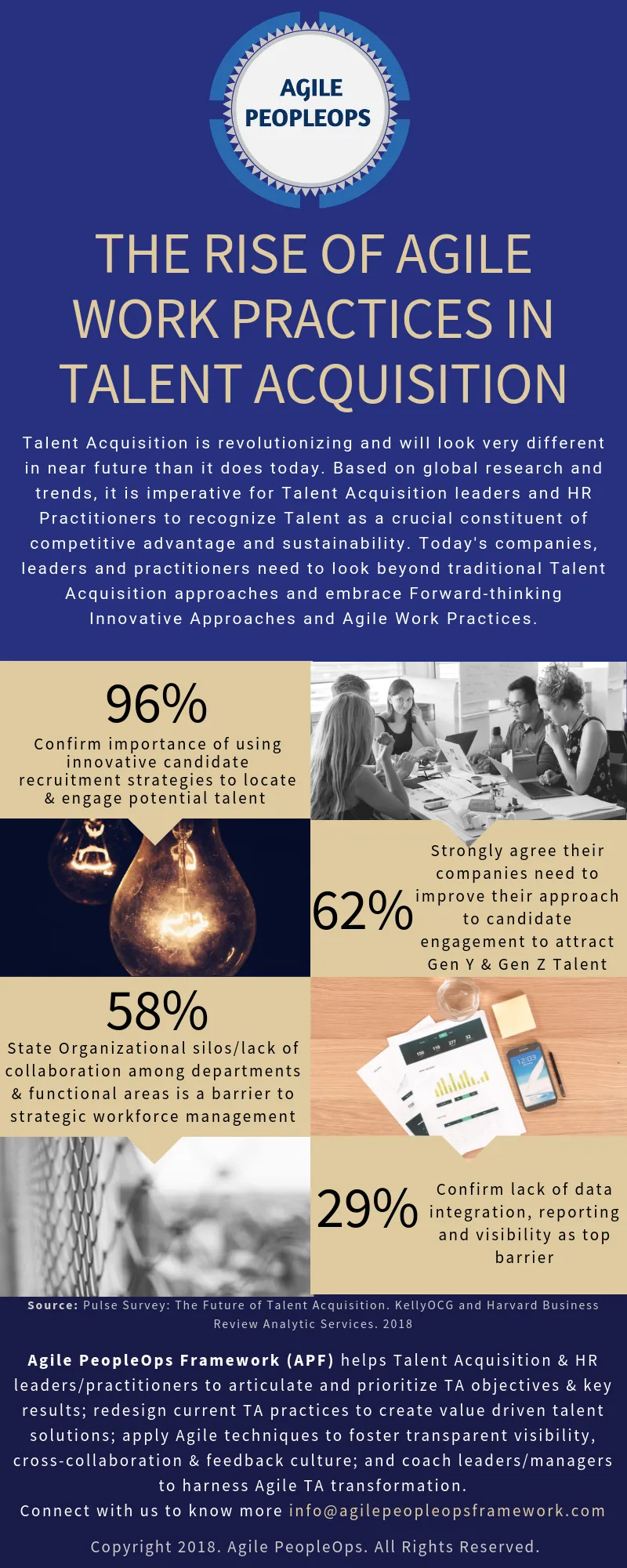
The Rise Of Agile Work Practices In Talent Acquisition

The Rise of Agile Work Practices in Talent Acquisition

Agile HR is the application of “agility” to the function of Human Resource Management.

Agility here means developing nimble & responsive management practices that involve constant feedback loops, and teams working in short work cycles & engaging in frequent retrospectives.

The concept of “agile-methodology” came into being during the 1990s in the area of software development. The developers wanted a flexible (agile) solution for the stumbling blocks they were facing in the process of software development.

Over time, it has become a widely recognized management method across various functions, departments, and industries, adopting a proactive approach rather than a reactive one.

Research | Early Decisions Made By Talent On Job Acceptance